
-- Shanghai programme puts robot deployment, connected production and sector-specific AI applications on the agenda for manufacturing teams.
China International Industry Fair (CIIF) is bringing robotics, industrial internet and manufacturing AI discussions into its 2026 forum programme, giving manufacturers several ways to examine the requirements behind factory automation. The exhibition is scheduled for 12–16 October at the National Exhibition and Convention Center (Shanghai), with related meetings taking place in exhibition halls and the adjoining hotel conference facilities.
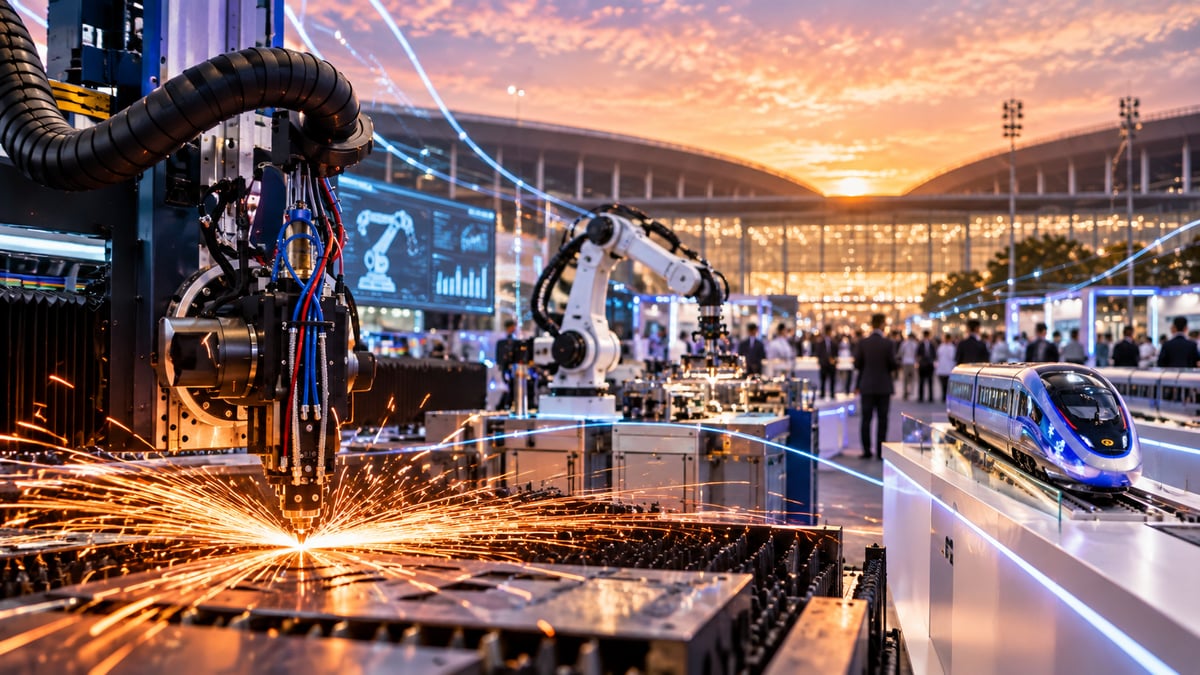
A robotics summit, an industrial internet conference and manufacturing AI sessions address different parts of a production project: equipment tasks, production information and software applications. The connection is relevant to engineering and digitalisation teams whose responsibilities cross departmental boundaries.
The wider industry context is reflected in the International Federation of Robotics’ 2026 robotics trends. The federation identifies AI-enabled autonomy and closer integration between information technology and operational technology as areas of development, while stressing the need for industrial humanoids to demonstrate reliability and efficiency. These trends provide a useful lens for reading the CIIF programme: interest in new robotic capabilities sits alongside questions about how they would perform in production.
Robot deployment moves beyond the demonstration
The 12th China Robot Industry Summit Forum is scheduled for 13 October in Hall 4.2-D2. Its announced theme, “Embodied Industry: Redefining Intelligent Manufacturing,” covers industrial robot upgrades, industrial applications for humanoid robots, core technologies and collaboration across the industry chain.
The forum’s description also identifies the practical pressures around adoption: adapting to operating conditions, achieving reliability in volume production, controlling costs and coordinating supply chains. For an engineering audience, those subjects shift the discussion from what a robot can demonstrate to what a production team would need to evaluate before using it.
The IFR analysis makes the operating questions more specific. For industrial humanoids, it identifies cycle times, energy use and maintenance costs as requirements alongside reliability. These dimensions give engineers a basis for comparing an emerging robot format with established automation on a particular task. A different physical design may change how a task is approached; the production requirements still need to be met.
For example, a manufacturing team considering a robotic task might examine how it changes across part variants, what happens when execution is interrupted and how much operator intervention is required to restart. A demonstration can show one sequence, while those questions concern the surrounding work. They also connect robot selection to maintenance arrangements and the people responsible for the line. This makes the summit's emphasis on operating conditions relevant beyond a discussion of robot movement alone, without assuming that one format suits every factory.
The session window runs from 12:30 to 17:00, with check-in until 13:15 and the opening scheduled for 13:15.
Industrial internet connects the discussion to production systems
On the same day, the International Industrial Internet Conference (IN³C) is scheduled from 09:00 to 18:00 in Ballrooms 1 and 2 at the InterContinental Shanghai at NECC. A detailed session agenda has not yet been published on its official listing. The confirmed time and location nevertheless place a full-day industrial internet event alongside the afternoon robotics summit.
The industrial internet adds an information perspective to the equipment discussion. A robot may complete its assigned movement while production, maintenance and quality teams still need different records of what happened. The engineering issue is how equipment information reaches the people and systems that use it. That could involve identifying a part, recording an interruption or connecting an equipment event to a production order, depending on the application.
Consider a stopped machine. A maintenance team may need its fault history, a production planner may need the expected recovery time, and a quality team may need to identify the parts affected. Passing on the same alarm to all three does not necessarily answer those questions. The example illustrates why connectivity and usable production information are separate concerns: the value of an equipment signal depends on the context available to the team receiving it.
IN³C and the robotics summit overlap, making the programme a choice between perspectives for an individual delegate. A team covering both subjects would need to divide attendance or select parts of the agendas. The combination is particularly relevant where equipment engineering and factory digitalisation are being considered within the same project.
Manufacturing AI receives an application focus
Later in the week, the calendar lists two manufacturing AI application tracks at the ICT Lounge, 6.2H-A061. An equipment and smart manufacturing track is scheduled for 14 October, 14:00–16:00, followed by an automotive and robotics track on 15 October, 10:00–12:00. The two subject descriptions follow the Chinese titles published in the official calendar.
The equipment track and the automotive and robotics track provide two application settings for the AI discussion. Their published listings currently give themes and session windows, with speaker and case details still unavailable. The difference in setting remains useful: a machinery function and a broader automotive production process can place different demands on the data, interfaces and people involved in an AI application.
For example, a proposed equipment function might be judged at the level of one machine, while a production application could depend on information exchanged across several operations. Comparing them requires a clear account of the task and the conditions under which the result was obtained. Questions about data ownership, responsibility for changes and integration with existing systems then follow from that starting point. These are issues for delegates to investigate as further programme details emerge, rather than conclusions announced for either session.
The two AI tracks fall on successive days, allowing delegates to follow both without the direct time conflict presented by the meetings on 13 October. An engineering team could use the equipment session to pursue machine-level questions, then examine how those questions change in automotive and robotics settings. The schedule supports that comparison; the depth of discussion will depend on the presentations delivered.
Linking forum themes with the exhibition
CIIF’s Robotics Show (RS) and Industrial Automation Show (IAS) are theme shows within the wider exhibition. Their presence gives visitors a way to follow a forum discussion with equipment and automation research on the exhibition floor. That connection can support follow-up investigation of an issue raised in a session, provided the relevant equipment or expertise is represented.
The programme also creates a practical division of work for visiting teams. A robotics specialist can follow equipment and task requirements, while a digitalisation colleague follows information flows and software responsibilities. Bringing their observations together around the same production problem would make differences easier to identify: a missing interface, an unclear maintenance responsibility or a result assessed under unfamiliar conditions. Those findings could shape a later supplier discussion or a factory trial. The October meetings provide a setting for that investigation, while the decision to adopt a technology remains with the manufacturer.
All session times are Shanghai local time, UTC+8. Programme arrangements may change, and international visitors should confirm session language, interpretation and individual booking requirements through the official CIIF forum calendar. Exhibition registration should not be treated as confirmation of a forum reservation.
Contact Info:
Name: Nancy Xu
Email: Send Email
Organization: China International Industry Fair
Website: https://www.ciif-expo.com/homeEn
Release ID: 89204780
Should you come across any errors, concerns, or inconsistencies within this press release's content, we urge you to reach out without delay by contacting [email protected] (it is important to note that this email is the authorized channel for such matters, sending multiple emails to multiple addresses does not necessarily help expedite your request). Our committed team will promptly address your feedback within 8 hours and take appropriate measures to resolve any identified issues or guide you through the removal process. Providing accurate and dependable information remains our utmost priority.



