
-- Held on 14–15 November 2026 as the official business side event running in parallel with the 49th ASEAN Summit (15–17 November 2026) in Manila, the ASEAN Business and Investment Summit, or ABIS, gathers established Chinese corporate executives and veteran industry representatives. Amid this roster, one name stands out for its unusual profile: Fu Zhi, CEO and founder of ComNergy. Born in 2000, he cuts a sharp contrast to the grey-haired leadership that usually dominates such regional tech dialogues. His presence is less a ceremonial footnote than a signal worth unpacking: what exactly has this young founder built back home, and can his model translate to Southeast Asia’s fragmented digital markets?
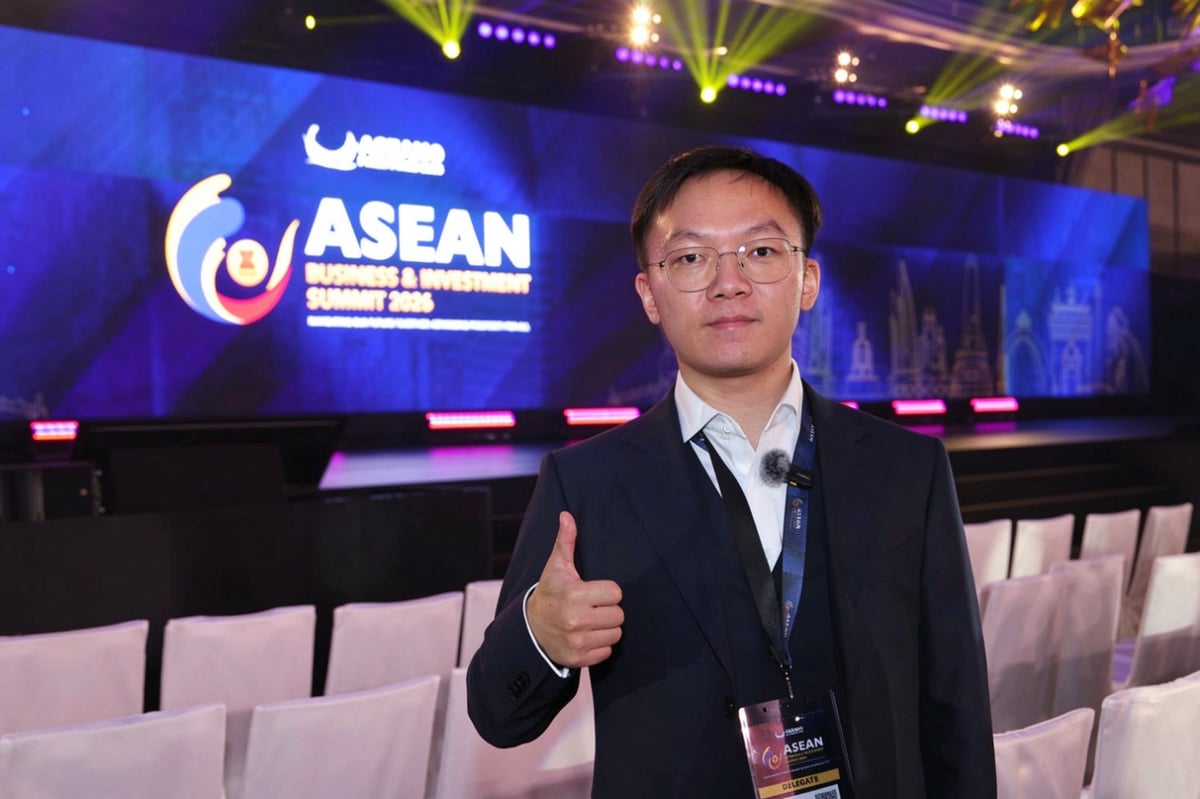
A current PhD candidate at Tsinghua University who took academic leave to found ComNergy, Fu launched the firm in 2023 around a simple but technically ambitious thesis: computing power, similar to utility resources, can be aggregated and scheduled from scattered, idle hardware resources. Instead of building brand-new mega data centers from scratch, ComNergy’s platform stitches together disaggregated GPU capacity spread across different server rooms, edge devices and institutional clusters, creating a shared “computing grid” for AI inference and lighter model workloads.
On the domestic front, the company has made tangible headway. It has linked hundreds of thousands of dispersed computing nodes and dozens of server rooms across China, landed provincial-level computing dispatching projects for several regional governments, and counted major AI developers and internet firms among its clients. It has also secured backing from heavyweight investors including CATL and China Internet Investment Fund, closing its Series A round with annual recurring revenue exceeding RMB 200 million. For a founding team still fresh out of university labs, that track record is unusual.
The core appeal of its model inside China is cost flexibility. Many smaller AI teams and startups cannot afford reserved, long-term access to high-end GPU clusters. ComNergy’s scheduling layer lets them tap spare capacity on demand, paying only for what they consume. This addresses a familiar pain point: widespread GPU idleness alongside fierce competition for scarce AI compute.
That domestic track record naturally raises questions for ASEAN. The region is hungry for affordable AI infrastructure as countries prepare to operationalise the Digital Economy Framework Agreement (DEFA). But Southeast Asia is not China. Power stability, data sovereignty rules, cross-border data transfer limits, internet latency and local hardware availability differ sharply from one jurisdiction to the next. A resource pooling system built for China’s domestic coordinated computing ecosystem may not work seamlessly across ASEAN’s patchwork of regulations and uneven infrastructure.
So what should observers expect from Fu’s participation? We should not treat his attendance as proof the product is ready for regional rollout, nor read it as official endorsement. The real test lies in what comes after the event.
Can ComNergy adapt its distributed scheduler to respect local data governance rules in each ASEAN market? Will it build genuine local partnerships rather than simply exporting its domestic platform? Can it deliver predictable service quality when resources are scattered across heterogeneous nodes under different power and network conditions? Most importantly, can its flexible, pay-as-you-go compute model serve ASEAN’s huge base of micro, small and medium enterprises that cannot afford heavy capital investment in AI infrastructure?
Fu’s arrival also marks a broader shift. China’s tech export story has long been associated with large platforms, telecom equipment vendors and hyperscale cloud operators. Now a cohort of post-2000 founders, trained in top technical universities and focused on foundational infrastructure rather than consumer apps, is stepping into regional industry and policy dialogues. They carry a different mindset: engineering-first, focused on utilisation efficiency and resource optimisation, not just user growth.
The early verdict is open. Fu’s domestic wins are impressive, but ASEAN will demand localisation, compliance and reliability above flashy technology. If ComNergy can prove its distributed grid works for Southeast Asia’s uneven digital landscape, this young founder could emerge as an interesting new bridge between China’s compute ecosystem and ASEAN’s digital economy ambitions. If not, his appearance will remain a notable, but ultimately symbolic, moment.
Contact Info:
Name: Yuchuan
Email: Send Email
Organization: ComNergy Tech Limited
Phone: +86 18124016585
Website: https://suanli.cn
Release ID: 89210001
In the event of encountering any errors, concerns, or inconsistencies within the content shared in this press release, we kindly request that you immediately contact us at [email protected] (it is important to note that this email is the authorized channel for such matters, sending multiple emails to multiple addresses does not necessarily help expedite your request). Our dedicated team will be readily accessible to address your feedback within 8 hours and take appropriate measures to rectify any identified issues or facilitate press release takedowns. Ensuring accuracy and reliability are central to our commitment.



